
Keynote Speakers

July 7, 2026:
Doctoral Consortium & Tutorials
July 8-9, 2026:
AIME Main Conference
July 10, 2026:
Workshops
Keynote Speakers
Tal Arbel

Full Professor, Canada CIFAR AI Chair – Mila
Core Member, Mila – Quebec AI Institute
McGill University, Dept. of Electrical and Computer Engineering
Associate Member, McGill School of Computer Science
Centre for Intelligent Machines
Director, Probabilistic Vision Group & Medical Imaging Lab
FCAE – Fellow of the Canadian Academy of Engineering
IVADO Researcher
Executive Editor, MELBA Journal (@MELBAjournal)
Keynote Address: "Towards Equitable Image-Based Personalized Medicine: Causality, Confidence, and Bias Mitigation"
In current clinical practice, treatment decisions often rely on broad demographic factors and standardized markers that miss individual patient nuances. In this talk, I explore how uncertainty-aware causal deep learning—informed by medical images and demographics—can tailor treatments to a patient’s unique profile, improving the accuracy, fairness, and safety of personalized medicine. This framework is grounded in large-scale MRI data from randomized controlled trials for neurological disease treatments. To ensure these personalized models are truly equitable and trustworthy, we must rigorously expose and mitigate hidden biases. I will highlight how fine-tuned Vision-Language Foundation Models (e.g. based on Stable Diffusion) offer interpretable, patient-specific explanations by generating precise medical image counterfactuals—powerful tools for uncovering and mitigating biases driven by spurious correlations. Building on this, I will present recent strategies for correcting confidence calibration biases across population subgroups in Multimodal Large Language Models (MLLMs). Finally, I will offer a glimpse into the enormous potential of Agentic AI in advancing clinical care. Transitioning toward dynamic clinical agents holds immense promise for unlocking transparent reasoning and advanced explainability, ultimately paving the way for a truly interactive and trustworthy era of clinical decision support.
Short Bio
Tal Arbel is a Professor in the Department of Electrical and Computer Engineering and an Associate Member of the School of Computer Science at McGill University, where she directs the Probabilistic Vision Group and Medical Imaging Lab within the Centre for Intelligent Machines. She is a Canada CIFAR AI Chair, a Core Member of Mila – Quebec Artificial Intelligence Institute, a Fellow of the Canadian Academy of Engineering, an Associate Member of the Goodman Cancer Institute, and a Co-Advisor for the ELLIS PhD Program.
Prof. Arbel’s research centers on the development of probabilistic deep learning methods in computer vision and medical image analysis. Her current work in causal inference, generative models, Vision-Language Models, and Agentic AI supports the safe, equitable, and trustworthy clinical deployment of personalized medicine. She has adapted her models for a wide range of real-world applications, particularly in neurological diseases. Notably, the machine learning algorithms developed by her team for detecting and segmenting lesions in brain MRIs have been utilized in the clinical trial analysis of almost all new Multiple Sclerosis (MS) drugs used worldwide.
A recipient of the 2025 McGill Bravo Award and the 2019 Christophe Pierre Award for Research Excellence, her lab’s research regularly receives Best Paper and Best Poster honors at premier venues like MICCAI and MIDL. Prof. Arbel frequently serves on the organizing committees of major international conferences (including MICCAI, MIDL, ICCV, and CVPR). She is also a co-founder of the online journal Machine Learning for Biomedical Imaging (MELBA), where she served as Editor-in-Chief for five years and currently serves as an Executive Editor.
Muhammad Mamdani
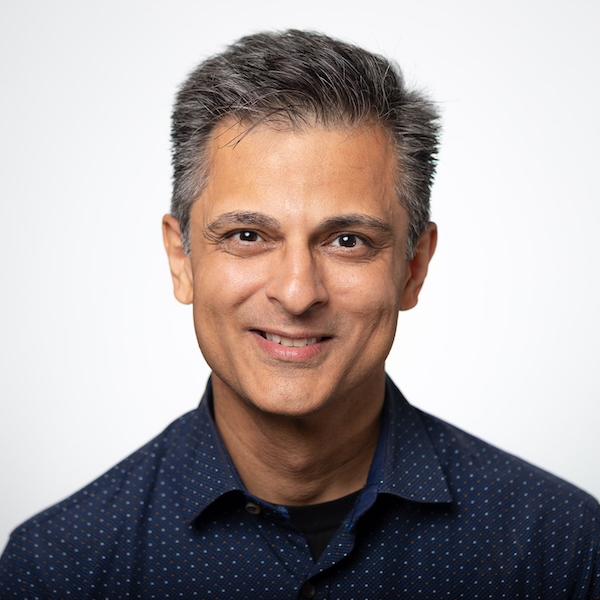
Clinical Lead – AI at Ontario Health
Director – University of Toronto Temerty Centre for Artificial Intelligence Research and Education Medicine (T-CAIREM)
Faculty Affiliate – The Vector Institute
Affiliate Scientist – IC/ES
Professor, University of Toronto
Keynote Address: "The Application of Artificial Intelligence in Healthcare: Learning from Successes and Failures"
Artificial intelligence is increasingly being adopted in healthcare with mixed results. As healthcare organizations and clinicians grapple with complex issues related to AI solution deployments such as governance and oversight, change management, ethical considerations, workforce implications, and return on investment, there is a greater appreciation of the challenges in realizing the value of AI solutions in actual clinical practice. This session will provide an overview of the challenges in applying AI solutions in healthcare using case examples and will offer guidance on how to realize value from promising AI solutions in healthcare.
Short Bio
Dr. Mamdani is Clinical Lead – Artificial Intelligence at Ontario Health and Director of the University of Toronto Temerty Faculty of Medicine Centre for Artificial Intelligence Research and Education in Medicine (T-CAIREM). Previously, Dr. Mamdani was Vice President of Data Science and Advanced Analytics at Unity Health Toronto where his team deployed over 50 AI solutions to improve patient outcomes and hospital efficiency. Dr. Mamdani is also Professor in the Department of Medicine of the Temerty Faculty of Medicine, the Leslie Dan Faculty of Pharmacy, and the Institute of Health Policy, Management and Evaluation of the Dalla Lana School of Public Health. He is also an Affiliate Scientist at IC/ES and a Faculty Affiliate of the Vector Institute. In 2024, Dr. Mamdani’s team received the national Solventum Health Care Innovation Team Award by the Canadian College of Health Leaders. Also in 2024, Dr. Mamdani was named international AI Leader of the Year by AIMed. Previously, Dr. Mamdani was named among Canada’s Top 40 under 40. He has published over 600 studies in peer-reviewed medical journals. Dr. Mamdani obtained a Doctor of Pharmacy degree (PharmD) from the University of Michigan (Ann Arbor) and completed a fellowship in pharmacoeconomics and outcomes research at the Detroit Medical Center. During his fellowship, Dr. Mamdani obtained a Master of Arts degree in Economics from Wayne State University with a concentration in econometric theory. He then completed a Master of Public Health degree from Harvard University with a concentration in quantitative methods.
Thank You to Our Keynote Sponsor

AIME 2026 gratefully acknowledges the generous support of the CarMa Institute as the sponsor of this keynote session. As a Platinum and Keynote Sponsor of AIME 2026, CarMa Global Enterprise is helping bring together researchers, clinicians, industry leaders, and policymakers from around the world to advance the responsible and impactful use of artificial intelligence in healthcare.